Showing posts with label time machine. Show all posts

Wednesday, February 18, 2015

Interviewing Dr. Ronald Mallett


Hello fellow time travel fans! I’m so sorry that I haven’t been updating lately, but I plan to remedy that. Right now we’re still plugging along with the editing, but I thought I would share with you some awesome news; earlier this month we had the chance to interview Professor Ronald Mallett, and it was so much fun!


Dr. Ronald Mallett interview
Interviewing Dr. Ronald Mallett! 


For those of you who don’t know, Dr. Ronald Mallett is a theoretical physicist at the University of Connecticut. He’s most renowned for his paper that he wrote back in the early 2000’s that proves that theoretically, time travel to the past can be possible. Now he’s raising the funds to apply this theory in an experiment and potentially build a time machine. 


Dr. Mallett explains his theory that circulating light beams could create a space-time loop. 


How might that work? In a nutshell, it has to do with Einstein’s Theory of Relativity, which says that matter and energy can affect gravity. And in turn, gravity affects space+time. Because light is a form of energy, you could use a ring of light using lasers to send neutrons back in time. And to go even a step further, you could spin the neutrons clockwise or counterclockwise, and that could be used as a binary code to send messages to the past.


it's not a ghost it's gravity
Gravity affects space+time, just like in Interstellar. 


The day we got to the University of Connecticut, I was so worried that everything would fall through because there was a weather alert that a massive snowstorm was brewing. They were canceling flights, shutting down roads, and there was even a curfew installed for the night! But we got to spend a few hours talking with Dr. Mallett just before the blizzard hit. 


Getting some exterior shots... so much snow! 


We got to chat about the importance of science fiction, video games, coming out of the “time travel” closet, about the importance of having inspirational teachers, and most importantly, what inspired Dr. Mallett's to study time travel: his father. 

If you’re interested learning more about Dr. Mallett’s work and life, you can visit his personal website, or check out his memoir here. 


Stay tuned!

Gisella

P.S. Members of the Time Travel Society, we have an exclusive clip from the interview just for you! Check out our Kickstarter update. 

Monday, December 1, 2014

3 Time Machine stories before H.G. Wells’ The Time Machine


H. G. Wells The Time Machine marked a turning point not only in science fiction, but the time travel genre; but he wasn’t the first one to come up with the idea of a “time machine”. We go into this more in depth in the documentary, but I thought I would share some time travel stories I found that featured time machinery pre- H.G. Wells.


1) El Anocronópete (1887)

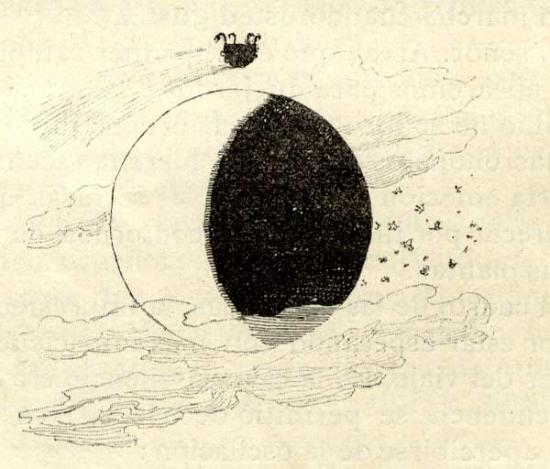
Spanish science fiction fans, this is for you. Beating H.G. Wells’ The Time Machine to print by 7 years, author Enrique Gaspard created an elaborate cast iron ship called, “El Anacronópete”. Using electricity, pneumatic tubes, and some strange fluid that prevents passengers to grow younger when they travel back in time, a haphazard group of characters travel from the World’s Fair in Paris 1878 to various moments in history like the Battle of Tetuán in Morocco, to Granada, Spain in 1440, and 3rd Century China. It’s a fantastical, adventurous story that, like The Time Machine, also uses time travel to explore social issues, albeit in a lighthearted comedic way.

Illustrations from El Anocronópete


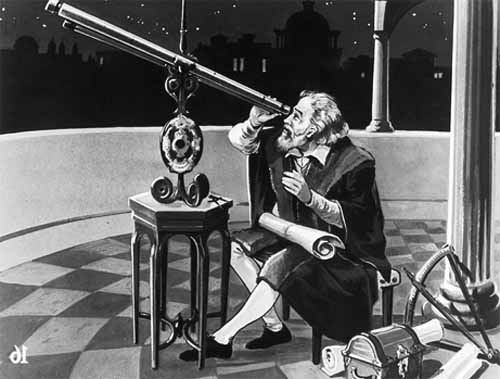
Galileo's telescope, unfortunately not a Historioscope. 
2) L'Historioscope (1883)

Eugène Mouton, considered an early writer of science fiction, was a French writer of Creole descent. His short story, L’Historioscope, tells a story about a historian who meets a very eccentric old gentleman who has invented a means of actually seeing the past. In this case the time machine is sort of an electrical telescope in while a person can look back into history by tracking light waves from past events as they spread through the ether into space.


This is actually pretty cool because NASA is building a “time machine” telescope with the ability to see 13.5 billion years ago… http://www.msn.com/en-us/news/technology/nasa-builds-a-time-machine-telescope-100-times-as-powerful-as-the-hubble/ar-BBemBWW

You can read the short in this obscure, translated French anthology of short scifi stories: http://www.amazon.com/News-Moon-French-Science-Fiction-ebook/dp/B0066QDC7K

Astronomical Clock, Prague
3) The Clock That Went Backwards (1881)

Considered by many to be the first story published to feature a time machine (if you count a clock as a time machine!), The Clock That Went Backwards is a short story follows two cousins and a mysterious clock that takes them 300 years into the past. It wasn’t until after his death that U.S. writer Edward Mitchell was identified as the author. I tried looking into more information about Mitchell, but there seems to only be one book devoted to his work (nowhere online), and it stresses his importance to modern science fiction literature. He wrote some of the very first stories featuring:

  • Faster-than-light travel ("The Tachypomp," 1874)
  • Teleportation ("The Man Without a Body," 1877)
  • Mind transfer ("Exchanging Their Souls," 1877)
  • Cybernetics ("The Ablest Man in the World," 1879)
  • Cryogenic preservation ("The Senator's Daughter," 1879)

You can read the story here: http://www.forgottenfutures.com/game/ff9/tachypmp.htm#clock


I think it's fascinating to see how the time machine archetype was beginning to take shape. 

H.G. Wells and his contemporaries were writing these stories during the 2nd Industrial Revolution- where “machines” were synonymous with scientific progress and societal advancements such as the steam engine, the automobile and the type writer. The ability to create a machine to accomplish the fantastical now seemed possible, and to these writers, it encouraged the idea that perhaps we could create an apparatus that could even allow us to jump through time.


And today, this archetype has evolved into a hot tub, police box, telephone booth, a car... who knows what the next iconic image of a time machine will be?