Showing posts with label scifi. Show all posts

Wednesday, February 18, 2015

Interviewing Dr. Ronald Mallett


Hello fellow time travel fans! I’m so sorry that I haven’t been updating lately, but I plan to remedy that. Right now we’re still plugging along with the editing, but I thought I would share with you some awesome news; earlier this month we had the chance to interview Professor Ronald Mallett, and it was so much fun!


Dr. Ronald Mallett interview
Interviewing Dr. Ronald Mallett! 


For those of you who don’t know, Dr. Ronald Mallett is a theoretical physicist at the University of Connecticut. He’s most renowned for his paper that he wrote back in the early 2000’s that proves that theoretically, time travel to the past can be possible. Now he’s raising the funds to apply this theory in an experiment and potentially build a time machine. 


Dr. Mallett explains his theory that circulating light beams could create a space-time loop. 


How might that work? In a nutshell, it has to do with Einstein’s Theory of Relativity, which says that matter and energy can affect gravity. And in turn, gravity affects space+time. Because light is a form of energy, you could use a ring of light using lasers to send neutrons back in time. And to go even a step further, you could spin the neutrons clockwise or counterclockwise, and that could be used as a binary code to send messages to the past.


it's not a ghost it's gravity
Gravity affects space+time, just like in Interstellar. 


The day we got to the University of Connecticut, I was so worried that everything would fall through because there was a weather alert that a massive snowstorm was brewing. They were canceling flights, shutting down roads, and there was even a curfew installed for the night! But we got to spend a few hours talking with Dr. Mallett just before the blizzard hit. 


Getting some exterior shots... so much snow! 


We got to chat about the importance of science fiction, video games, coming out of the “time travel” closet, about the importance of having inspirational teachers, and most importantly, what inspired Dr. Mallett's to study time travel: his father. 

If you’re interested learning more about Dr. Mallett’s work and life, you can visit his personal website, or check out his memoir here. 


Stay tuned!

Gisella

P.S. Members of the Time Travel Society, we have an exclusive clip from the interview just for you! Check out our Kickstarter update. 

Monday, December 1, 2014

3 Time Machine stories before H.G. Wells’ The Time Machine


H. G. Wells The Time Machine marked a turning point not only in science fiction, but the time travel genre; but he wasn’t the first one to come up with the idea of a “time machine”. We go into this more in depth in the documentary, but I thought I would share some time travel stories I found that featured time machinery pre- H.G. Wells.


1) El Anocronópete (1887)

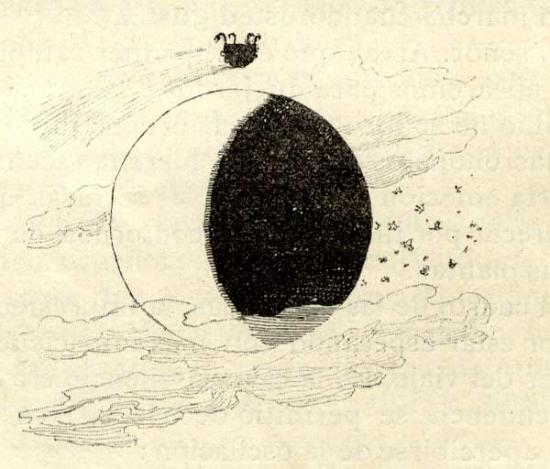
Spanish science fiction fans, this is for you. Beating H.G. Wells’ The Time Machine to print by 7 years, author Enrique Gaspard created an elaborate cast iron ship called, “El Anacronópete”. Using electricity, pneumatic tubes, and some strange fluid that prevents passengers to grow younger when they travel back in time, a haphazard group of characters travel from the World’s Fair in Paris 1878 to various moments in history like the Battle of Tetuán in Morocco, to Granada, Spain in 1440, and 3rd Century China. It’s a fantastical, adventurous story that, like The Time Machine, also uses time travel to explore social issues, albeit in a lighthearted comedic way.

Illustrations from El Anocronópete


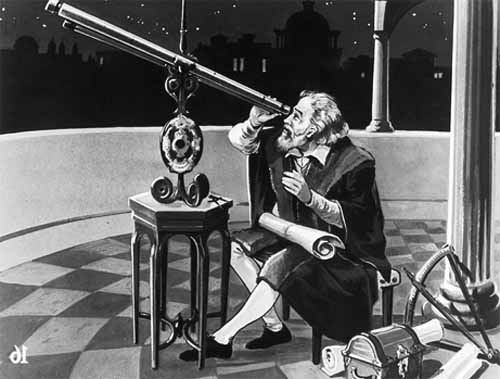
Galileo's telescope, unfortunately not a Historioscope. 
2) L'Historioscope (1883)

Eugène Mouton, considered an early writer of science fiction, was a French writer of Creole descent. His short story, L’Historioscope, tells a story about a historian who meets a very eccentric old gentleman who has invented a means of actually seeing the past. In this case the time machine is sort of an electrical telescope in while a person can look back into history by tracking light waves from past events as they spread through the ether into space.


This is actually pretty cool because NASA is building a “time machine” telescope with the ability to see 13.5 billion years ago… http://www.msn.com/en-us/news/technology/nasa-builds-a-time-machine-telescope-100-times-as-powerful-as-the-hubble/ar-BBemBWW

You can read the short in this obscure, translated French anthology of short scifi stories: http://www.amazon.com/News-Moon-French-Science-Fiction-ebook/dp/B0066QDC7K

Astronomical Clock, Prague
3) The Clock That Went Backwards (1881)

Considered by many to be the first story published to feature a time machine (if you count a clock as a time machine!), The Clock That Went Backwards is a short story follows two cousins and a mysterious clock that takes them 300 years into the past. It wasn’t until after his death that U.S. writer Edward Mitchell was identified as the author. I tried looking into more information about Mitchell, but there seems to only be one book devoted to his work (nowhere online), and it stresses his importance to modern science fiction literature. He wrote some of the very first stories featuring:

  • Faster-than-light travel ("The Tachypomp," 1874)
  • Teleportation ("The Man Without a Body," 1877)
  • Mind transfer ("Exchanging Their Souls," 1877)
  • Cybernetics ("The Ablest Man in the World," 1879)
  • Cryogenic preservation ("The Senator's Daughter," 1879)

You can read the story here: http://www.forgottenfutures.com/game/ff9/tachypmp.htm#clock


I think it's fascinating to see how the time machine archetype was beginning to take shape. 

H.G. Wells and his contemporaries were writing these stories during the 2nd Industrial Revolution- where “machines” were synonymous with scientific progress and societal advancements such as the steam engine, the automobile and the type writer. The ability to create a machine to accomplish the fantastical now seemed possible, and to these writers, it encouraged the idea that perhaps we could create an apparatus that could even allow us to jump through time.


And today, this archetype has evolved into a hot tub, police box, telephone booth, a car... who knows what the next iconic image of a time machine will be?


Monday, November 10, 2014

Carl Sagan, Interstellar, and Stigmas


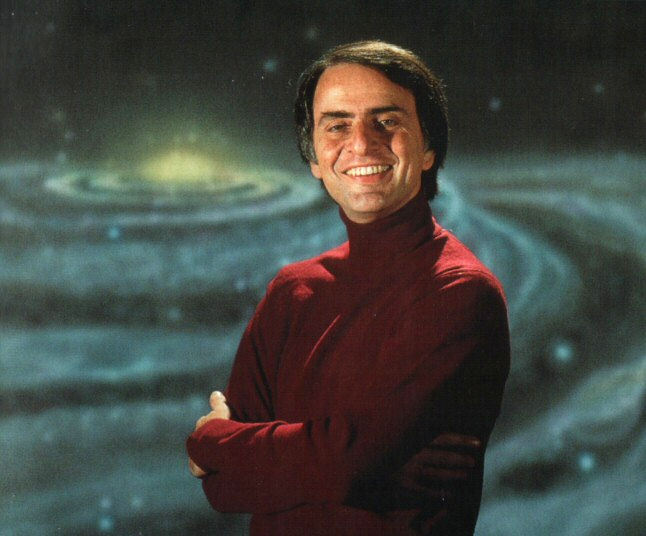
Happy belated birthday Carl Sagan!

I’m late posting this, but in case you didn’t know yesterday was Carl Sagan’s birthday! I just wanted to write a really quick post because I’m such a huge fan! I have the original Cosmos in mp3 audio, and I love listening to it. Carl isn’t just a scientist, he’s a poet. He has an almost magical way of putting words together about this earth that sound so beautiful and awe inspiring.

Back in 1999, Carl did an interview with NOVA where he talks about time travel:

“Time travel into the indefinite future is consistent with the laws of nature. It's only travel backwards in time that is the source of the debate and the tingling sensations that physicists and science-fiction readers delight in.”

It’s really interesting to me because I find that there has been a stigma (perhaps still is) in the scientific community when addressing the topic of time travel. Even the incredible Stephen Hawking was at some point afraid about talking about it:

"Time travel was once considered scientific heresy. I used to avoid talking about it for fear of being labeled a crank. But these days I'm not so cautious. In fact, I'm more like the people who built Stonehenge. I'm obsessed by time. If I had a time machine I'd visit Marilyn Monroe in her prime or drop in on Galileo as he turned his telescope to the heavens. Perhaps I'd even travel to the end of the universe to find out how our whole cosmic story ends.” 
http://www.dailymail.co.uk/sciencetech/article-1270531/Stephen-Hawking-backs-possibility-time-travel-millions-years-future.html

It has only been until fairly recently that things have started to change. There are more and more physicists today, such as John Cramer and Ronald Mallet, who have come out seeking to raise funds to conduct time travel experiments. This is why I find it really impressive that over 15 years ago, Carl Sagan had the guts to talk about this idea in a very realistic, candid way- and I truly believe his work has helped change the direction of how we view time travel today.


Here are two snippets of the original interview…

Your inquiries about space travel for Contact sparked a whole new direction in research on time travel. How does that make you feel?
I find it marvelous, I mean literally marvelous, full of marvel, that this innocent inquiry in the context of writing a science-fiction novel has sparked a whole field of physics and dozens of scientific papers by some of the best physicists in the world. I'm so pleased to have played this catalytic role not just in fast spaceflight but in the idea of time travel.

How do you feel being responsible for bringing time travel perhaps a step closer?
I don't know that I've brought time travel a step closer. If anyone has it's Kip Thorne. But maybe the joint effort of all those involved in this debate has at least increased the respectability of serious consideration of the possibility of time travel. As a youngster who was fascinated by the possibility of time travel in the science-fiction novels of H.G. Wells, Robert Heinlein, and others, to be in any way involved in the possible actualization of time travel—well, it just brings goose bumps. Of course we're not really at that stage; we don't know that time travel is even possible, and if it is, we certainly haven't developed the time machine. But it's a stunning fact that we have now reached a stage in our understanding of nature where this is even a bare possibility.
You can read the whole interview Carl Sagan did with NOVA here: http://www.pbs.org/wgbh/nova/physics/Sagan-Time-Travel.html 

Carl Sagan mentions Kip Thorne, who was one of the very first people to come up with the idea of using wormholes as a method of time travel. He’s also helped developed to concept for Interstellar, which, I’m hoping to see later this weekend! Here's a really cool interview with Kip Thorne and the science behind Interstellar. It's totally worth taking a look at!


I hope to be updating this blog more consistently from now on! The past couple of weeks after the Kickstarter campaign have been very busy as we organize footage, figure out logistics and get ready for the next phase of the documentary.

Thanks again, and as always, I would love to hear your thoughts!


Monday, September 29, 2014

Is Science Fiction Important?


Wanda and I just sent off a grant last week- besides being in the middle of a crowdfunding campaign, we are always looking for other outlets for funding! But in the world of documentary grant writing, there is a question that's almost always asked: Why your film is an important film to make? What is this urgent issue that needs to be discussed right now?

I’ve struggled with the idea of why this documentary is “important”- because let’s be honest- time travel (and science fiction while we’re at it) is a “fun” topic to think about. You can lump it in as “fancifiul” or not rigorous in thought compared to more pressing issues like global warming, political dilemmas etc.

But ultimately, science fiction has value because it promotes an interest in science. 


Stephen Shankland/CNET


I got to see Neil Degrasse Tyson talk in Seattle earlier this month. He brought up this valid point about how talking about science and science fiction can really help make science a cultural priority, which in turn, inspires us to make technological advancements.

Tyson believes that investing in science and education can strengthen a country; and the fact that the U.S. was one of the most prominent countries in the 20th century had a direct correlation to the scientific push that came during World War II. He believes that nowadays, the U.S. is hopelessly falling behind Europe, China, and other developing countries.

Of course there's a debate going on in the U.S. over what subjects should be taught the most, but teaching more science doesn't have to mean teaching less art or philosophy. The beauty of science fiction is that it touches on all these things.

I get that science and science fiction are two completely different things- but if you look at the advances in science and technology, they are often preceded by descriptions in works of science fiction books and movies. And we shouldn't forget that! 

It lets us reflect upon our history, it allows us to take a step back and examine cultural issues from today, and it makes us think about the future. So yes, maybe time travel isn't important, but science fiction and bringing up ideas in science fiction, is. I'm going to leave you with a sappy, inspirational quote now from my man Leonardo: 


If you haven't check it out yet, we're still in the middle of our Kickstarter campaign! You can check it out here. http://kck.st/1uUvoOk 


Thursday, September 4, 2014

Why Make This Documentary?

It’s been a couple of years working on this documentary, and almost always the question I get from my interviewees, friends, or anyone I talk to about the film is “So…why are you making a documentary about time travel?”

Calvin and Hobbes


I guess it goes all the way back to when I was a kid. Being a child of the 90’s, some of my favorite books—Harry Potter, A Wrinkle in Time—featured trips through history. I grew up reading Calvin and Hobbes, and my favorite parts were when Calvin and Hobbes got into their cardboard box time machine to visit dinosaurs.

La Jetée (Chris Marker 1962)


But I didn’t really become absorbed with the idea of time travel until, halfway through film school, I saw what would become my favorite film of all time. La Jetée (1962) is a 30 minute featurette directed by Chris Marker. Comprised of a series of black and white stills with narration, it tells a post apocalyptic story of a man being sent to different eras in order to rescue the present, and an image engrained in his mind, a memory when he was a child, that haunts him.

Time travel was something that was a fun, adventurous thing in books and movies, but Chris Marker’s version brought up ideas that were just mind blowing to me- bringing up ideas of time, memory and mortality in beautiful, stark imagery- and I was drawn to the whole idea of time and time travel.

Doing a documentary on time travel was the perfect excuse to jump wholeheartedly into a topic.

Originally, I wanted this film to pit the physicists studying time travel—the “realists”—against the “fanatics” who thought time travel was possible. My main question was: who was right? But then I realized a couple things.


  • Documentaries exploring whether time travel is possible are already out there, like Stephen Hawking’s Universe, or Through the Wormhole with Morgan Freeman. 
  • There are a lot—and I mean a lot—of time travel conspiracies [I refer to this academic paper on the subject: http://arxiv.org/abs/1312.7128]. And I didn’t want this film to be about conspiracies either.

What really inspired me when I was researching time travel was how far back the idea of time travel has spanned, and what that meant: Eons before H.G. Wells wrote The Time Machine, there were stories about time travel, although they don’t appear like the stories we see today, spanning across all cultures and myths. Humans are fascinated with time travel and it’s not just limited to a genre in fiction.


Urashima Taro

Mahabharata


A lot of people also ask if this is going to be a “nerdy documentary” about Star Trek and Back to the Future…to which the answer is yes, and no. I’m a nerd, for sure—but since time travel can be found everywhere from the Bible to video games to Afrofuturist literature, my nerd-dom is pretty wide-ranging at this point.


If you haven’t yet, check out the trailer for A Brief History of Time Travel, and I hope you can join me as I blog about my experiences making this film! 

Stephen Hawking threw a time traveler party in his TV Series to prove a point that there are no time travelers out there, but it was still cool!